
April 2026 | Sage Advice from the Oracle
Developments in the Middle East are understandably top of mind, and the human consequences certainly far outweigh any economic considerations. While we all hope for a peaceful resolution, our role as wealth managers is to focus on the implications for the economy and financial markets, which are the subject of this letter.
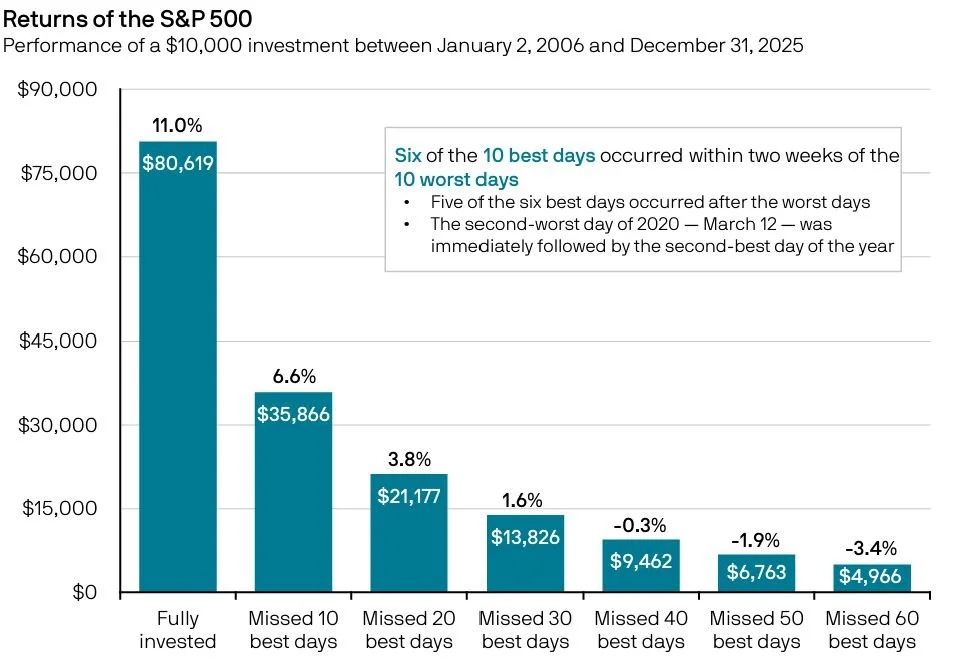
In times of crisis, it is a natural instinct to try to protect what matters most. However, history suggests that attempts to reposition portfolios based on near-term headlines have often proven to be counterproductive. Many of the market’s strongest days occur very close to its weakest, and missing those periods can have a meaningful impact on long- term results, as illustrated in the chart below.(1*) For example, missing just the 10 best days over the past 20 years would have reduced the annual return of the S&P 500 from 11% to 6.6%.(2*)
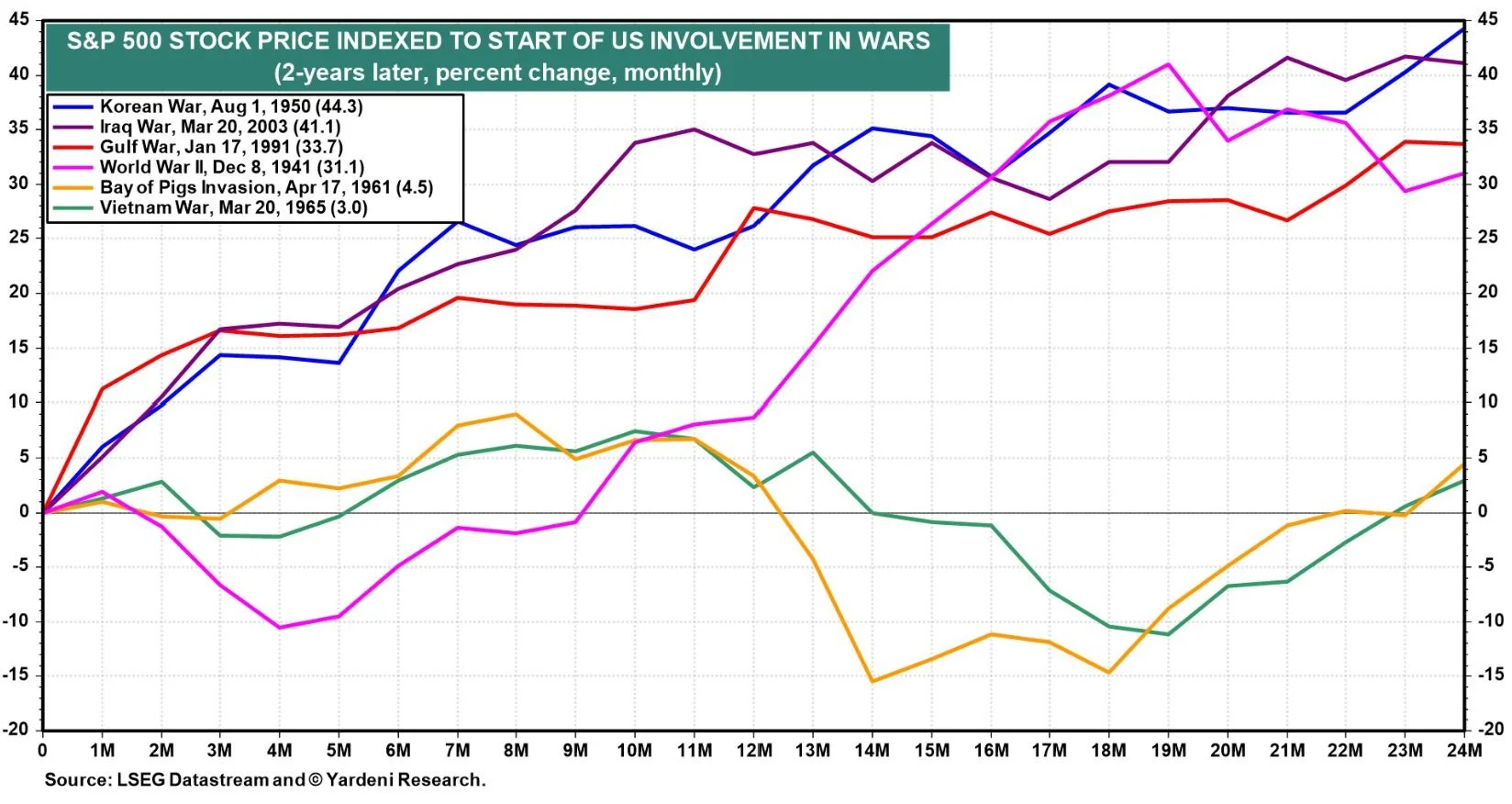
When looking specifically at periods of conflict, history offers a similar perspective. The chart below shows that the S&P 500 has been higher two years after the start of the past six major US military engagements.(1*)
Investment strategies should evolve as personal or financial circumstances change, but history suggests that making significant shifts in response to geopolitical events has often been a mistake. Over time, investment performance is driven primarily by business and economic fundamentals, and these will continue to guide our decisions.
We will close with some perspective from Warren Buffett, who retired last year but whose wisdom endures. Writing during the 2008–2009 financial crisis, The Oracle of Omaha offered the following reminder:
In the 20th century, the United States endured two world wars and other traumatic and expensive military conflicts; the Depression; a dozen or so recessions and financial panics; oil shocks; a flu epidemic; and the resignation of a disgraced president. Yet the Dow rose from 66 to 11,497.(3*)(4*)
— Brad Dinsmore
1. CHARTS: JP Morgan Asset Management 2026 Guide to Retirement, February 26, 2026 & Yardeni Research Quick Takes, April 5, 2026
2.The S&P 500 Index is a market-capitalization weighted index that includes the 500 most widely held companies chosen with respect to market size, liquidity, and industry. Investors cannot invest directly in an index.
3.The Dow Jones Industrial Average (DJIA or “the Dow”) is a price-weighted index tracking 30 prominent U.S. blue-chip companies. Investors cannot invest directly in an index.
4. Source: The New York Times, October 16, 2008