January 2026 | DATA DRIVEN
In last quarter’s letter, we discussed the importance of focusing on the underlying economic and financial data rather than the endlessly tumultuous headlines. This task is often far easier in theory than in practice. Whether global upheaval from Iran to Venezuela, or domestic politics from the White House to the Federal Reserve, the news has rarely been more captivating. Like many of you, we follow these developments with interest and concern. However, in our role as wealth managers, our responsibility is to remain focused on long-term business fundamentals and the careful stewardship of client assets. While politics can influence markets in the short run, history consistently shows that over time, stock prices are driven by earnings - and earnings are driven by consumer and business spending.
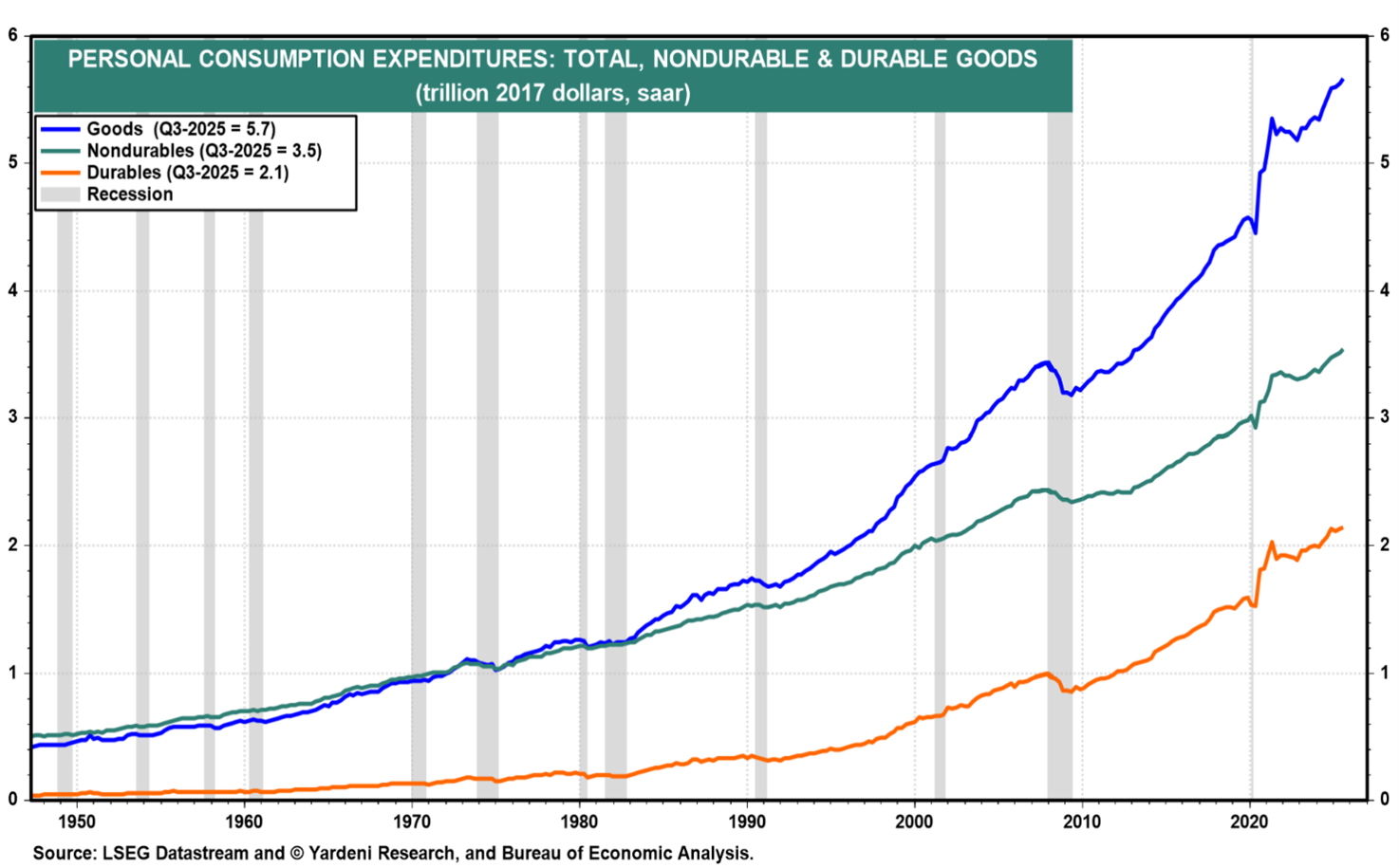
As the chart above illustrates, consumer spending remains strong. Retail spending on both durable goods (longer-lasting items such as cars and furniture) and non-durable goods (everyday items like food, gasoline, and medications) continues at a healthy pace.
Business spending tells a similar story. The chart below shows how much private businesses are spending on the assets they use to produce goods and services. This represents the capital businesses reinvest in their operations to maintain or expand production. As the data shows, this investment has continued to grow steadily.
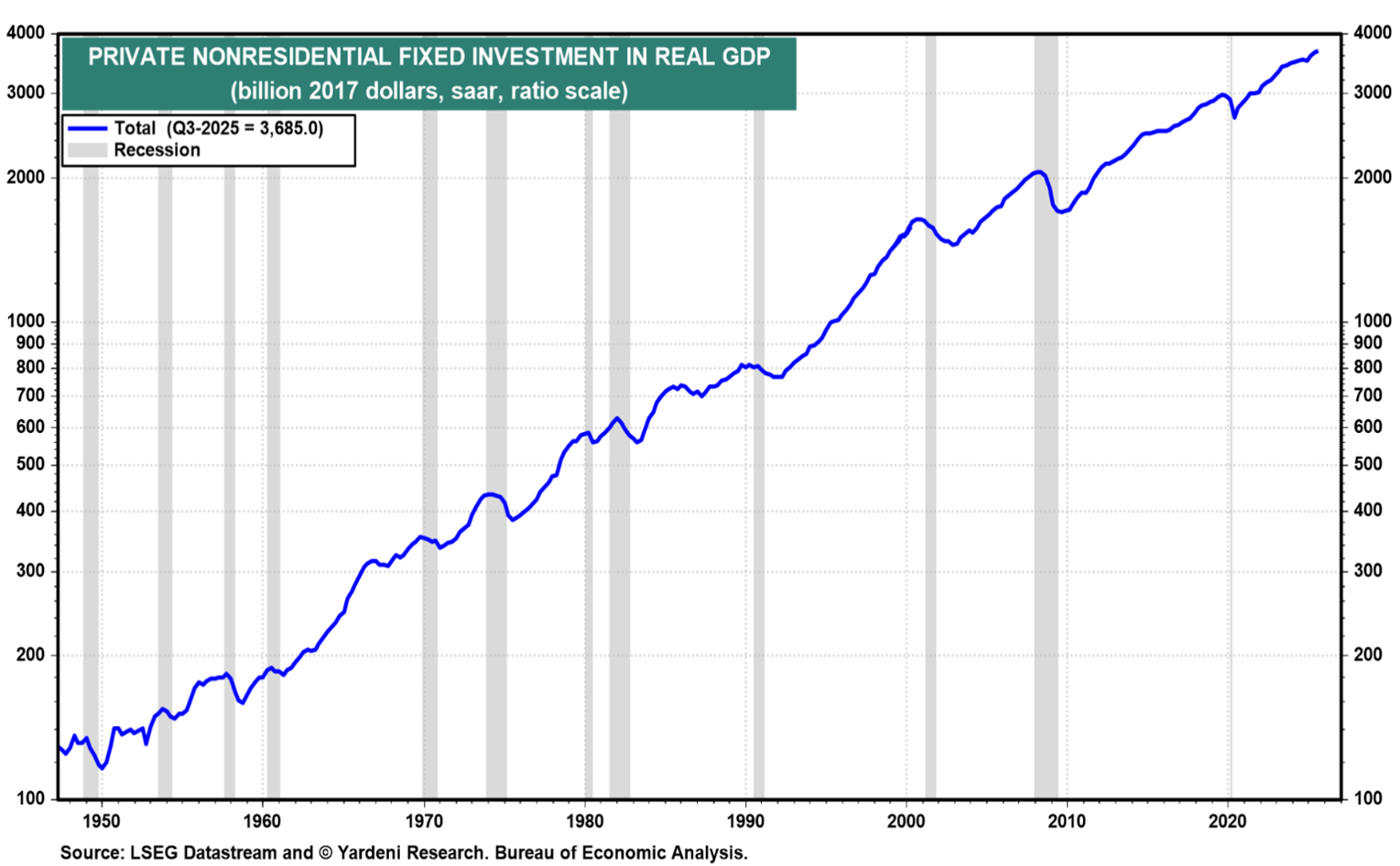
Looking ahead, we expect consumer and business spending to remain supportive of economic growth. Fiscal stimulus from tax cuts, combined with recent interest rate reductions, should provide additional tailwinds.
One noteworthy trend within business investment is spending related to artificial intelligence. Over the past several years, companies such as Microsoft, Amazon, and Alphabet have invested hundreds of billions of dollars in data centers and related infrastructure to support AI development. While we believe this trend will continue, it is reasonable to expect the pace of spending to moderate over time. The balance sheets of these companies are enormous, but not infinite.
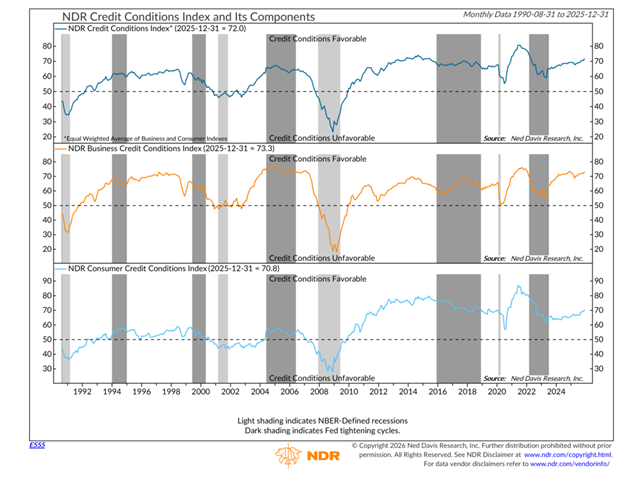
For now, credit conditions across the economy remain favorable. This is reflected in the Ned Davis Research Credit Conditions Index (CCI), shown in the chart below. The CCI measures both the cost and availability of credit in the U.S. Current readings are positive for both businesses and consumers, which is an important support for economic activity and financial markets.
One area that warrants closer attention is the labor market. Although the unemployment rate remains relatively low at 4.4%, there are signs of potential underlying weakness. Our final chart, on the next page, shows the monthly revisions to the employment report. Because timely information is critical, the Bureau of Labor Statistics releases an initial employment estimate each month, which is later revised as more complete data becomes available. Over the past eleven months, each revision has been lower than the original estimate.
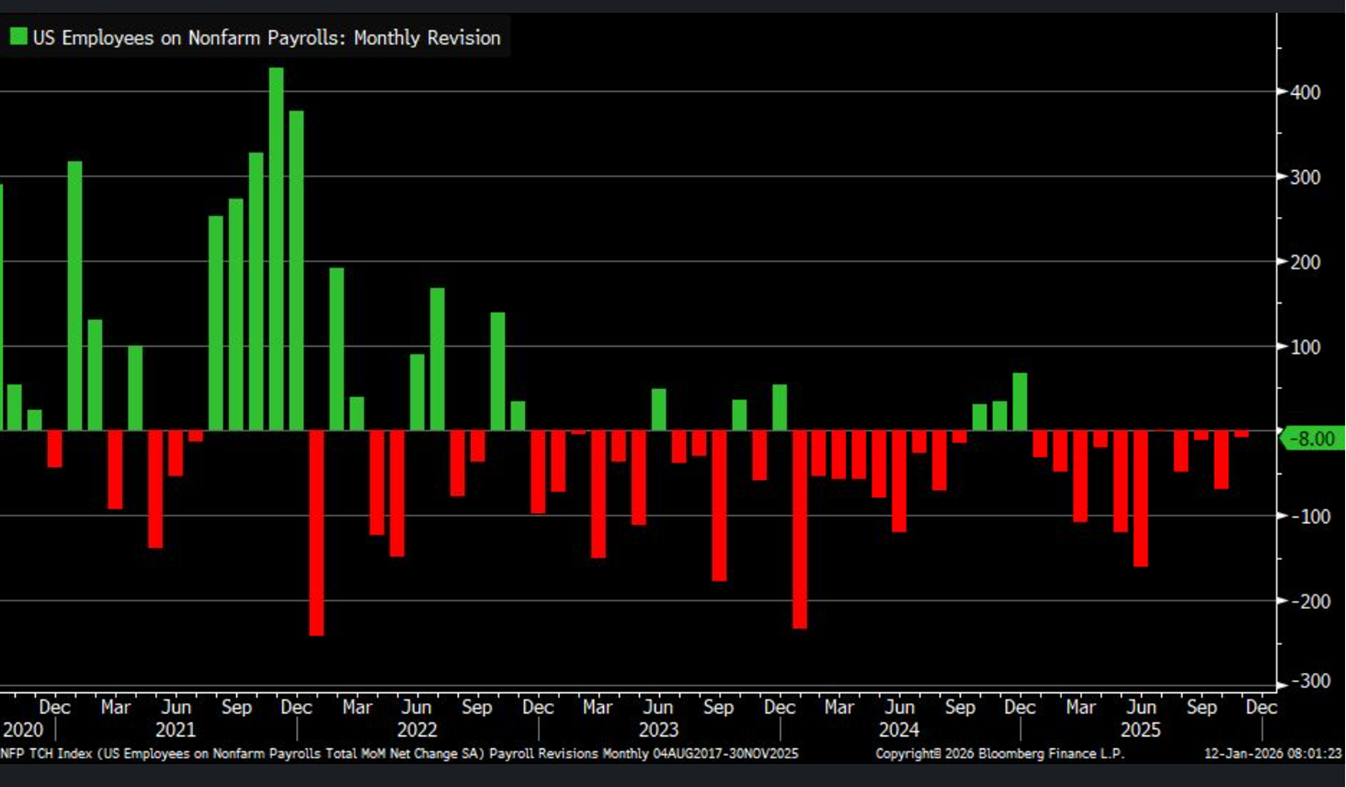
This pattern suggests the labor market might be weakening more than the headline data would suggest, and calls into question the level of consumer spending we are likely to see going forward – people who are nervous about their jobs tend to be more frugal in their spending. Again, we don’t want to let the headlines drive our decision-making. We will be watching these numbers closely, as will the financial markets, and the data will dictate our path forward.
— Brad Dinsmore